



Penn Fathom II 12 SD Mag
- £159.99
- (FREE UK Delivery)
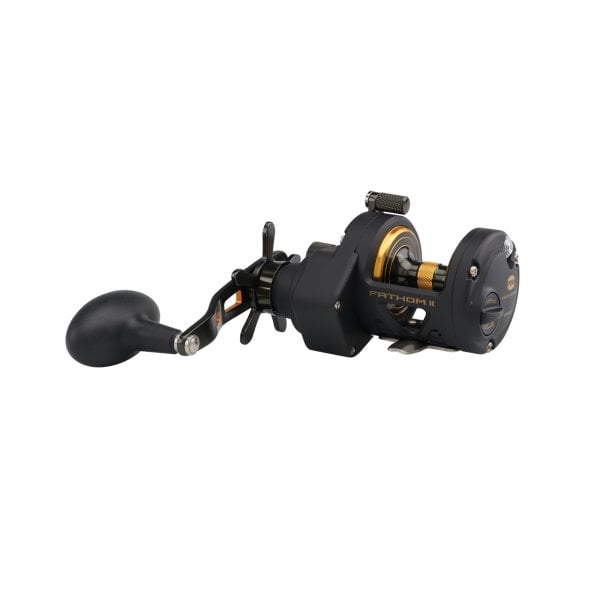
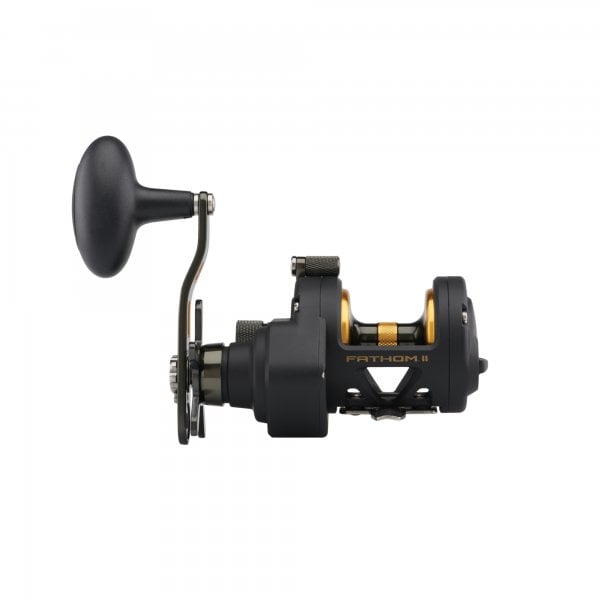
- Full metal body and sideplates
- Fast gear access sideplate
- Machine-cut marine grade bronze main gear with hardened stainless steel pinion
- Versa-Drag system with HT-100 washers
- Live Spindle with free floating spool
- Line capacity rings
- 6 shielded stainless steel ball bearing system
- Instant anti-reverse bearing
- Line capacity 395m/0.29mm
- Ratio6.1:1
- Max drag 13.6kg
- Weight 16.9oz
Quick Answers: Penn Fathom II 12 SD Mag
| Common question | Short answer |
|---|---|
| What is it? | A metal-bodied star drag conventional reel with a magnetic casting brake. |
| Best for | Shore and boat fishing where you cast baits and want control through the cast. |
| Gear ratio | 5.1:1 |
| Weight | About 451 g / 15.9 oz |
| Max drag | About 9.1 kg / 20 lb with HT-100 carbon washers |
| Braking | Magnetic casting brake plus live spindle |
| Line capacity | About 285 yd of 20 lb mono, or 365 yd of 50 lb braid |
| Spare spool | Not included as standard on this model |
Introduction to the Penn Fathom II 12 SD Mag
The Penn Fathom II 12 SD Mag is a star drag conventional reel built around a rigid metal frame. It is the version of the Fathom II 12 SD with a magnetic casting brake added, which is the whole point of the reel: it lets you cast a conventional reel with more control and fewer nests while keeping the winching power of a star drag.
At North East Tackle, we stock it for anglers moving from fixed spools to conventional reels, and for experienced casters who want a dependable bait reel for shore and boat work. It is not a distance-casting tournament reel. It is a practical, metal-bodied workhorse.
If you are comparing it with other baitcasters, it sits in our sea fishing reels range alongside the rest of the Penn multiplier lineup.

What the Penn Fathom II 12 SD Mag Is Built For
This reel is built for casting baits from the shore or a boat and then winching fish back with a star drag you control by hand. The rigid metal frame keeps the gears aligned when you lean into a fish. The live spindle design lets the spool spin freely on the cast, which is where the distance comes from.
The magnetic brake is what separates it from the standard Fathom II 12 SD. It slows the spool at the start of the cast so the line does not overrun. On a conventional reel, that is the difference between a clean cast and a bird's nest you spend ten minutes picking out.
- Best for: shore and boat bait fishing, light-to-medium lead work, and anglers learning conventional casting.
- Good for: night sessions and windy conditions where thumb control alone is harder.
- Less suited to: pure distance casting where a dedicated tournament reel is the better tool.
Key Specifications at a Glance
The figures below are Penn's published numbers for the Fathom II 12 SD family. Check the box for your exact SKU, because the Mag version and the standard version are listed separately in some catalogues.
| Feature | Penn Fathom II 12 SD Mag |
|---|---|
| Gear ratio | 5.1:1 |
| Retrieve per turn | About 76 cm / 30 in |
| Weight | About 451 g / 15.9 oz |
| Bearings | 4 + 1 stainless steel |
| Max drag | About 9.1 kg / 20 lb, HT-100 carbon washers |
| Mono capacity | About 285 yd of 20 lb |
| Braid capacity | About 365 yd of 50 lb |
| Frame | Rigid metal frame and sideplate |
| Braking | Magnetic casting brake, live spindle |
A 5.1:1 ratio with about 76 cm per turn is a middle ground. It is quick enough to pick up slack when a fish runs toward you, and geared low enough to winch a fish through tide without feeling like you are winding a handle with no leverage. The 451 g weight is light for a metal-framed conventional reel, which matters if you are holding the rod all session.
Why the Magnetic Casting Brake Matters
A conventional reel spool spins on the cast with nothing to slow it except your thumb. If the spool spins faster than the line leaves, the line loops and you get an overrun. The magnetic brake applies a controllable drag to the spool so it cannot outrun the line.
In practice, this is what you notice:
- Fewer overruns: the brake catches the spool when your thumb is a fraction late.
- Confidence to cast harder: you can push a cast knowing the brake will do some of the work.
- Better in wind: a headwind slows the bait, and the brake helps match the spool to it.
I have watched anglers new to conventional reels spend more time unpicking nests than fishing. The magnetic brake does not remove the need for thumb control, but it turns a steep learning curve into a manageable one. Set it slightly high for your first few sessions, then wind it back as your thumb improves.
Penn Fathom II 12 SD Mag vs Standard Fathom II 12 SD
The standard Fathom II 12 SD is the same reel without the magnetic cast control. Same frame, same drag, same gear ratio family. The difference is how much help you get through the cast, and how much you pay for it.
| Feature | Fathom II 12 SD | Fathom II 12 SD Mag |
|---|---|---|
| Frame | Rigid metal | Rigid metal |
| Drag | HT-100 carbon, star drag | HT-100 carbon, star drag |
| Casting brake | Centrifugal only | Magnetic plus centrifugal |
| Live spindle | Yes | Yes |
| Best use | Experienced casters, boat work | Learning to cast, windy and night sessions |
Which One Suits Your Fishing
| Your Fishing | Better Choice |
|---|---|
| New to conventional reels | Fathom II 12 SD Mag |
| Casting into wind or fishing at night | Fathom II 12 SD Mag |
| Confident thumb, want to save money | Standard Fathom II 12 SD |
| Boat fishing with no casting | Standard Fathom II 12 SD |
If you mostly drop baits from a boat, you gain nothing from the magnetic brake and the standard reel is the smarter buy. If you cast from the shore, the brake is worth the extra cost.
Setting Up the Penn Fathom II 12 SD Mag
Setup decides whether a conventional reel feels natural or fights you. Get the line and rod right and the rest follows.
Line Choice
- Mono: 15–20 lb mono is a sensible starting point. It has stretch, which is forgiving while you learn the cast.
- Braid: 30–50 lb braid gives more capacity and better bite indication, but braid can dig in if you do not lay it under tension. Consider a mono backing.
- Spool fill: Fill to within about 2 mm of the spool lip. Over-filling a conventional reel causes overruns fast.
Rod Pairing
- Shore: a 12–13 ft beachcaster rated 4–6 oz suits the reel and lets you cast comfortably.
- Boat: a 6–7 ft boat rod rated 20–30 lb line class matches the reel's drag and capacity.
Brake Setting
Start with the magnetic brake on a high setting and reduce it as your thumb control improves. Do not set it so low that the spool overruns on every cast, and do not set it so high that you lose all your distance.
Where It Works Best on UK Marks
On the North East coast and similar UK marks, this reel suits shore sessions where you cast a bait into a tide run and hold bottom, and boat sessions where you drop baits over rough ground. The metal frame and star drag give you the control to steer fish away from snags.
It is also a good match for float work and lighter tactics where you need to cast a bait accurately rather than purely for distance. Our float fishing for sea species in the UK guide covers the tactics that pair well with this reel.
Where it is not the best tool is pure long-range surf casting. A dedicated long-cast fixed spool will outcast it with less effort. This reel is about control and winching power, not maximum distance.
Expert Notes from the Shore
The most common mistake I see with a conventional reel is over-filling the spool. A full spool looks neat, but on a baitcaster it is the fastest route to a nest. Leave 2 mm of lip, even if it looks like you are wasting capacity.
- Set the brake before you cast, not after the first overrun. Start high and reduce it slowly.
- Use your thumb to feather the spool as the bait lands. The magnetic brake slows the spool, but it does not land the bait for you.
- Lay line under tension when you spool up. Loose line at the bottom of the spool causes problems later.
- Back the star drag off between sessions so the washers do not stay compressed.
The other thing worth saying plainly: this is not a reel for an angler who wants to pick it up and cast without thinking. It rewards a little practice. Spend an hour in a field before your first trip and you will get far more out of it.
Maintenance and Care
The metal frame and stainless bearings make this a durable reel, but saltwater will still find its way in if you let it.
- Rinse with freshwater after every session. Avoid high-pressure water into the bearings and drag.
- Back the drag off between trips.
- Dry the reel before storing it. Do not seal it in a damp bag.
- Service the bearings every season if you fish hard.
Penn does not include a spare spool as standard on this model. If you want to switch between mono and braid, plan for it up front.
Price and Value
The Fathom II 12 SD Mag sits in the mid-range for a metal-bodied conventional reel. It competes on build quality, drag consistency and the magnetic brake rather than on being the cheapest option. It is not the lightest or the smoothest baitcaster available, and it does not try to be.
If you want to see how it lines up with the rest of the brand, browse our Penn reels collection. If you fish for bass from the shore, our UK bass fishing guide will help you match the reel to the right tactics.
Frequently Asked Questions
Is the Penn Fathom II 12 SD Mag good for beginners?
It is one of the easier conventional reels to learn on because of the magnetic brake. It still needs thumb control and practice, so it is not as simple as a fixed spool. An hour in a field before your first trip makes a big difference.
Can I use braid on the Fathom II 12 SD Mag?
Yes. It holds about 365 yards of 50 lb braid. Braid can dig into itself under pressure, so lay it on under tension and consider a mono backing.
What is the difference between the Mag and the standard Fathom II 12 SD?
The Mag adds a magnetic casting brake. The frame, drag and gear family are the same. The brake gives you more control on the cast, which matters most for new casters and in wind.
Is the reel suitable for saltwater use?
Yes. The rigid metal frame and stainless bearings are built for saltwater. It is not sealed to the same level as a fully sealed spinning reel, so rinse it after every session and service it regularly.
What rod suits the Fathom II 12 SD Mag?
A 12–13 ft beachcaster rated 4–6 oz works for shore casting. A 6–7 ft boat rod rated 20–30 lb line class suits boat work.
Does it come with a spare spool?
No. Penn does not include a spare spool as standard on this model.